
Why AWP Matters
The construction industry continues to face significant challenges with predictability, cost control, and safe execution. Despite new tools and technologies, research shows that most capital projects still struggle to meet schedule and budget targets.
Advanced Work Packaging (AWP) was developed to address these challenges. At its core, AWP is a structured process that links engineering, procurement, and construction into a single, predictable flow of work. Instead of reacting to problems in the field, organizations that use AWP align their plans from the beginning, sequence activities through the Path of Construction, and ensure crews have the resources they need at the right time.
Free Resource: [Download the AWP Training Vendor Checklist], a one-page tool to help you compare providers and choose the right training partner.
What Is Advanced Work Packaging?
Advanced Work Packaging is a framework for delivering construction projects more effectively. It ensures that the right people have the right information, materials, and equipment at the right time.
Rather than treating planning and execution as separate stages, AWP integrates them. The result is a consistent, transparent process that improves collaboration, reduces delays, and gives field crews clarity on what must be achieved.
To embed AWP successfully, organizations often designate a Champion. Read more in Embracing Efficiency: The Function of an AWP Champion
Core Principles of AWP
At the heart of AWP are several principles that create alignment across engineering, procurement, and construction. These practices provide the structure that allows projects to move forward with clarity and predictability.
Path of Construction (PoC)
The Path of Construction defines the overall sequence of a project from the earliest stages. Establishing PoC upfront allows teams to coordinate deliverables, avoid conflicts, and reduce rework. Learn more in our article on the Path of Construction.
WorkFace Planning (WFP)
WorkFace Planning (WFP) ensures that crews have the tools, materials, and information they need before work begins. When implemented properly, WFP minimizes downtime, improves productivity, and provides field teams with achievable daily goals.
Explore how WFP works in practice in our post on WorkFace Planning.
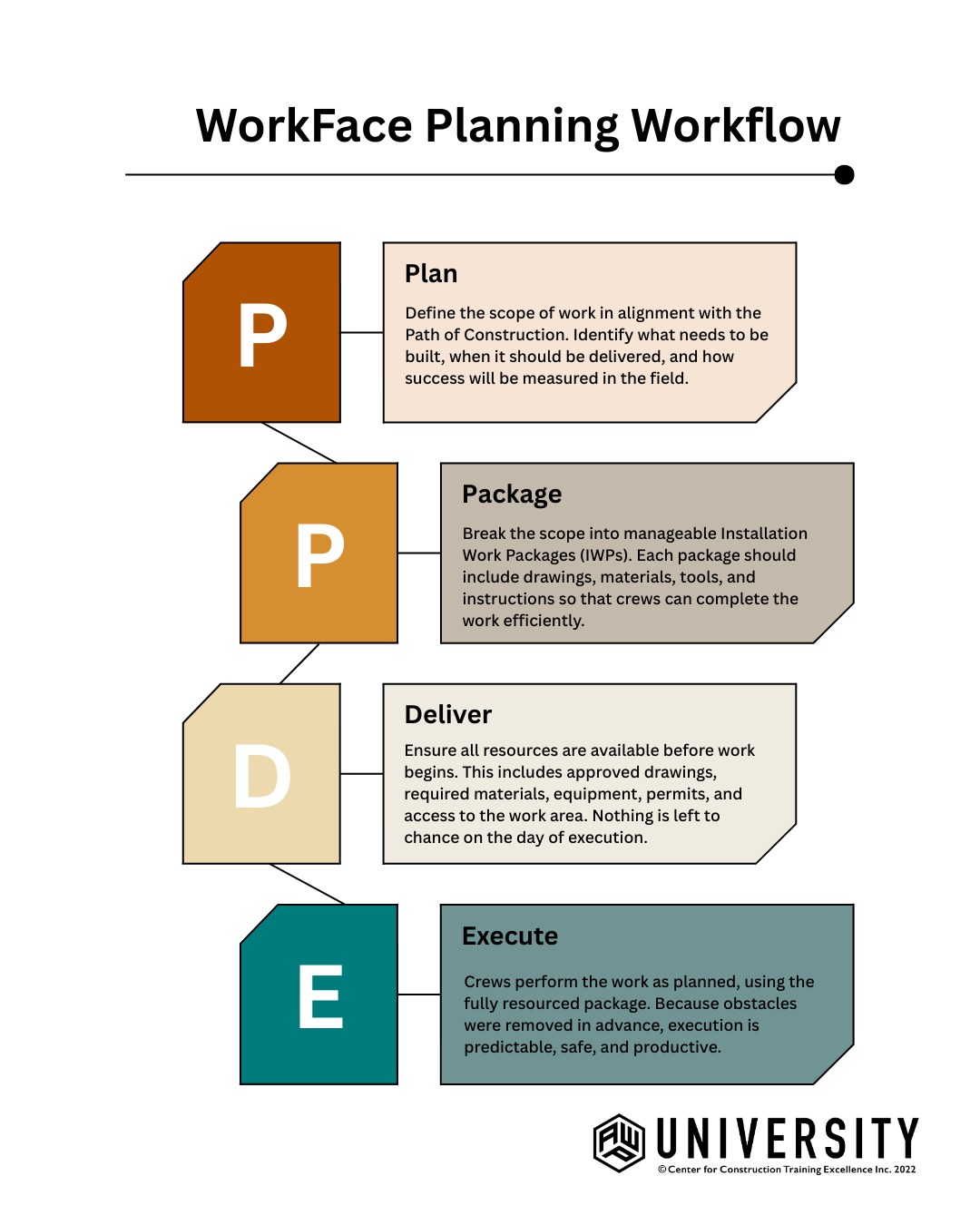
WFP turns AWP principles into reality at the field level. Discover how in Why WorkFace Planning Works in the Real World.
Work Packages
AWP organizes scope into structured packages that create a clear line of sight from design through execution:
-
Engineering Work Packages (EWPs) ? define deliverables for design.
-
Construction Work Packages (CWPs) ? translate engineering into buildable scopes.
-
Installation Work Packages (IWPs) ? define the specific tasks crews will perform in the field.
This hierarchy makes large projects manageable and ensures that all teams stay aligned.
See how forepersons and planners use these packages in our Execution General Foreperson Learning Path .
Constraint Removal
A proactive approach to identifying and resolving constraints is essential. By clearing obstacles before work begins, teams can maintain predictable flow and avoid costly delays.
Discover how this principle connects to leadership in our AWP Champion post.
Benefits of AWP Adoption
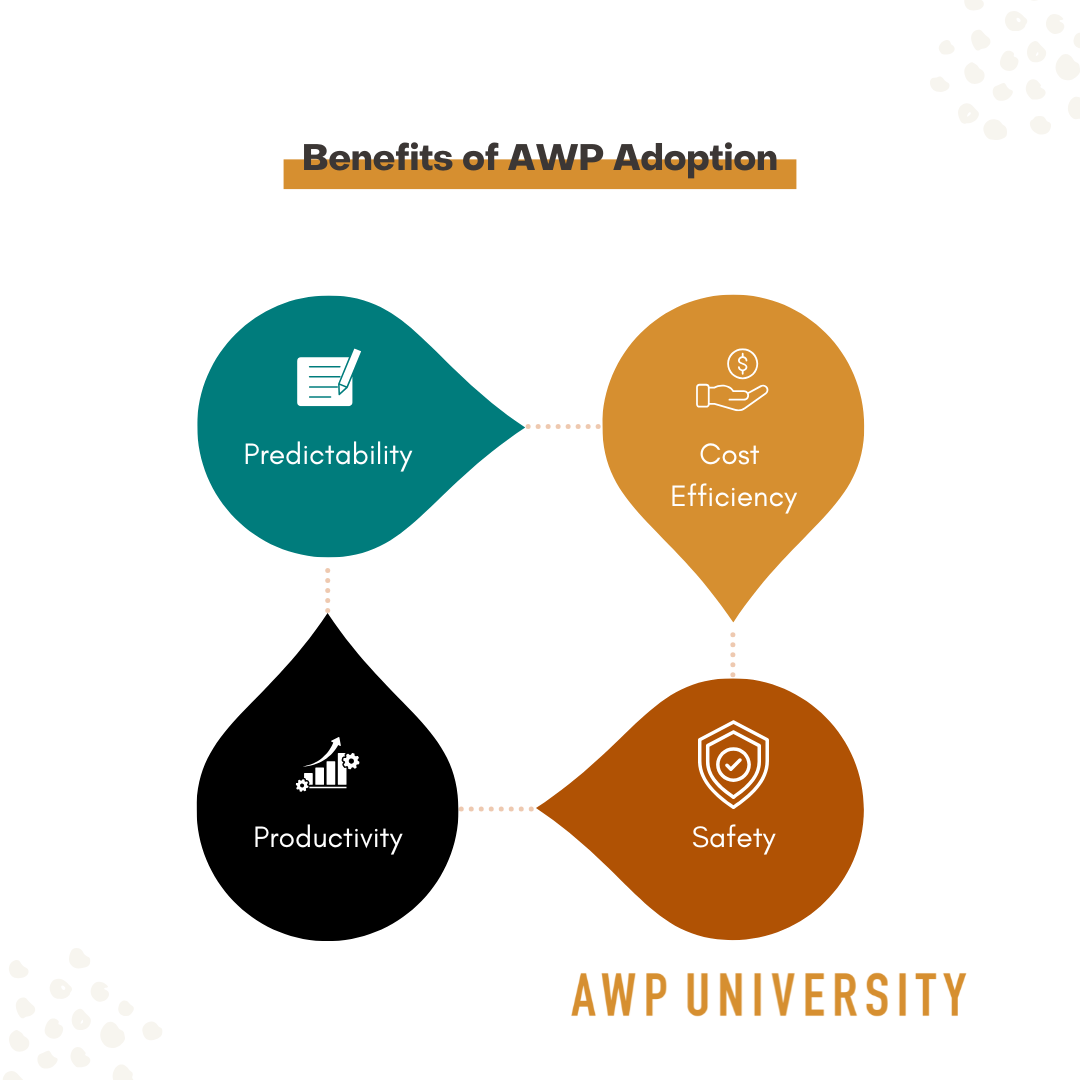
Organizations that adopt AWP consistently report improvements across performance areas:
-
Predictability ? Fewer surprises in the field.
-
Cost efficiency ? Reduced rework and overtime.
-
Productivity ? Higher utilization of labor and equipment.
-
Safety ? Clarity and preparation reduce risk.
Free Resource: [Download our Quick Guide: 3 Mistakes That Cost Projects Millions (And How to Avoid Them)]
Common Misconceptions About AWP
-
“AWP is just paperwork.” ? In reality, it is a field-first discipline focused on execution.
-
“AWP only applies to mega-projects.” ? While scale influences complexity, AWP principles are valuable on projects of all sizes.
-
“AWP is too complicated to implement.” ? With structured training and role-based learning paths, adoption is achievable and scalable.
Getting Started With AWP
For many organizations, the question is not if but how to begin. A practical roadmap includes:
-
Awareness ? Explore introductory resources and download free tools.
-
Training ? Enroll in a structured course such as Key Principles of AWP.
-
Role Development ? Build expertise through role-based Learning Paths (e.g., Champion, Foreperson, Planner).
Building Projects That Succeed
Advanced Work Packaging is more than a set of acronyms. It is a framework that connects planning with execution, delivering projects that are safer, more efficient, and more predictable.
Whether you are exploring adoption for the first time or looking to expand existing practices, AWP University provides the resources, training, and expertise to support your journey.
Start today:
-
Download the AWP Training Vendor Checklist.
-
Explore the Key Principles of AWP course.
-
Contact us at info@awp-u.com to discuss implementation options.